Italy: Articles

Giampaolo Tabarrini & His Montefalco Wines

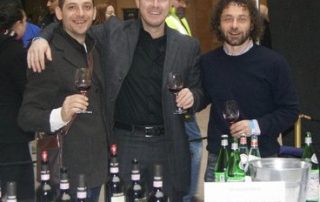
Giampaolo could not be missed at the tasting table…his enthusiastic tastings of his family’s Tabarrini wines filled the 2011 Wine Bloggers Conference Meet the Sponsor room. You couldn’t resist stopping by to enjoy his wines and listen to tasting notes and stories of his winery and hometown in Montefalco, Italy (province of Perugia in Umbria region).

Four generations of the Tabarrini Family have tended to these vines… then in the late ’90′s, Giampaolo decided to continue the tradition in a new way by bottling their own wine. The results are fantastic!

If you don’t know much about Umbria wine, here are a few facts.

  • Umbria is the region sitting next to Tuscany to the southwest.
  • Wine regions include Orvieto, Torgiano and Montefalco Sagrantino.
  • 850,000 hectoliters of wine produced each year…only a small percent of Italy’s production.
  • Grechetto is the top white grape producing a full bodied white wine.
  • Sagrantino, the typical red grape from the Montefalco area, is the hero of this region first appearing at the end of the 19th century. Traditionally this grape was only made in a sweet version and Sagrantino Passito DOC was authorized in 1977.
  • In 1992 Montefalco Sagrantino Secco and Passito became the 12th Italian wine to be designated a DOCG (a controlled and guaranteed demonination of origin). This designation requires a minimum aging of 30 months before release.

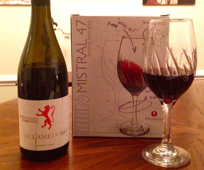
Tabarrini is a leading producer of Montefalco Sagrantino. Half of their twenty-two hectares of vineyards are dedicated to the Sagrantino grape, used in five of the six wines they produce. The wine I’ve sampled the most, thanks to the Live Wine Blogging Session at the Conference and the gift bottle in our Welcome Bag, is their Montefalco Sagrantino DOCG. This wine is one of three under their Colle Grimadesco trademark used for their highest quality wines.

Montefalco Sagrantino, Colle Grimaldesco, DOCG 2004 & 2005

  • 100% Sangrantino grapes
  • 10-15 year old vineyards with sandy, muddy soil mixed with some clay and river pebbles
  • Wine is soaked on the skins for over a month, aged 30 months in French oak then 6 months in bottle.
  • Deep ruby red color
  • Aroma is fragrant of blackberries and cassis
  • BIG red full of berry flavor and spice… uniqueness and complexity of this wine comes through in every sip.
  • Pair with roasts, braised meats, mature cheeses
  • 14% alcohol.

Visit Tabarrini’s website for a look at their full wine line-up then buy them on line here. You can also ‘Like’ them on Facebook and follow Giampolo on Twitter.

And when you’re in Umbria, visit their cantina on the property. It represents Tabarrini’s innovation and tradition…three floors including one for fermentation, one for barrels and a cellar completely underground. On the first floor you can see the ritual drying of the Sagrantino grapes.

You don’t want to miss a chance to taste these special wines with Giampaolo himself!

Tagged As:
, , , , , , , ,

Viareggio, a Tuscan Culture and Coast Weekend

Tuscany + Beach + Sea + Sun + Italian Food = What more could you ask for? It’s all in Viareggio, on the Versilian Coast of Tuscany. Our first trip here, unlike the stop in Lucca, was totally planned. Mapping out our first Italian holiday adventure since moving to Europe, I thought what about a few September days at the beach while in Tuscany? Beach doesn’t typically come to mind when you think of Tuscany but we found it and loved it!

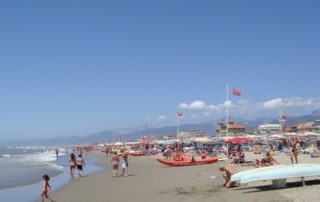
We crossed the mountain headed northeast from Lucca and within 40 minutes arrived to a quiet dark Viareggio and the Hotel President. Excited to see the town the next morning, we awoke early and out our big windows was the perfect view…long beach, beach clubs, a boardwalk, sunshine and sea.

The Versilian Coast is one of the oldest sea resorts in Tuscany runs north to Forte de Marmi and sits between the Tyrranean Sea and Apuan Alps. Viareggio’s name came from the fortress that Pisa, Lucca and Genoa built here in 1172 to defend the coast at the end of the road, via regia. Beach clubs first opened here in 1828 and since its been a hub for Italian family holidays. It peaked as a resort in the 1920′s and while La Passeggiata (‘the boardwalk’) is a bit worn now, you can still imagine the splendor looking at The Liberty Style/Art Nouveau buildings.

The town has been a port since 1913 and now some of the biggest yachts in the world are made here by companies like Perini Navi and Benetti. You won’t believe the size of these things!! Walk down to the pier to check them out sitting in the port and being made in massive hangars.

Viareggio’s most famous event is Carnevale di Viareggio, one of the biggest carnival festivals in Europe. Taking place since 1873, it now draws over one million people each year for its five masked parades full of papier mâché.

Overall there isn’t a ton to do here which makes it perfect! On our second visit we felt like regulars and hit the same spots. We spent most of our time at Bagno Irene, one of over 100 beach clubs lining the sand of Viareggio. Family run like most of the clubs, its been in the family since 1943. You feel the Italian hospitality the moment you walk in. Hotel President has a special rate (for chair, umbrella, use of their facilities) with them so we headed over late morning after the hotel’s yummy breakfast and lazed away the day on the beach surrounded by Italians on holiday. If you need an espresso or beverage, make the short walk to the club. If you’re hungry, they have amazing food. And if you want a beach massage, just look for one of the many great Asian masseuse strolling the beach offering their services (and don’t be intimidated…it’s fabulous!).

After sunset drinks on the beach, we cleaned up for dinner and strolled La Passeggiata. The town is very low key and casual. There are tons of restaurants to chose from…pizza, pasta and seafood are plenty. We like Sa Playa (V.le Margherita, 68) and Tito Pizzeria (Lungomolo del Greco 3). La Passeggiata is also fun to walk in the morning down to the pier to see the fresh catches on display or rent a bike in the park to explore.

So if you’re looking for an incredible Tuscan weekend of culture and coast, Viareggio and Lucca are perfect!

More great Viareggio photos are in the gallery!

Tagged As:
, , , , , , , , , ,

Lucca, a Tuscan Culture and Coast Weekend

A missed turn on the A12 in northwest Tuscany led us to Lucca, a medieval gem of a Tuscan town. (Original destination…Leaning Tower of Pisa…we saw it from the road. ;) ) And while only there for a few hours, we knew we’d return.

Developed as a Roman city in 180 BC, Lucca sits inside still intact 16th century ramparts. With the Apuan Alps in the distance, the town and its 2000 year history are beyond charming and perfect for a day, long weekend or week’s stay anytime of year.

Our first visit was in September which lucky for us is festival month. We stumbled upon the happening main Piazza San Michele where we discovered the most delicious traditional pastry of Lucca dating back to 1893, Frate (like a lemon donut), and yummy fresh anisette crisps being made on the spot. After a short exploration, you can walk the tiny town’s picturesque streets and squares in a few hours, we relaxed at Ristorante del Teatro for an amazing dinner of bruschetta, gnocchi al pesto and tagliatonni pomodoro paired with a local red wine, Montecarlo Rosso.

Our return trip a few summers ago, one of our favorite Italian weekends, centered around the now 13 year Summer Festival Concert Series and trip to the Tuscan Coast. After settling in at the charming Hotel Palazzo Alexander, a 12th century building decorated in noble Lucchese style, we strolled the town’s highlights then took a seat at Il Cuore for an aperitif. Enjoying a prosecco, we soaked in one of my favorite Italian views…the sun shining on Tuscan orange houses dotted with green wooden shutters. Then we made our way over to Piazza Napoleone, home of the Summer Festival hosting well known bands like Elton John, Dave Matthews and James Taylor (our concert!) from late June – July. It’s a spectacular spot for a concert. As we approached the piazza and settled in for a pre-show dinner on Ristorante del Teatro’s patio, the square was getting lively as the town prepared for its mid-point in the concert series. Afterwards we found our seats and to my surprise, I simply bought the more expensive of the two ticket tiers, we were literally in the front row for James Taylor. And the concert was amazing!! James Taylor live in concert in an Italian piazza enjoying local wine under star lit skies. It was truly a magical evening!

We spent the next day enjoying more of the MUST GO‘s (my #1 is definitely the Summer Festival concert series)…

  • The Ramparts: Explore the huge city walls and their 2.5 mile long path either by bike or on foot. You’ll circle the town and enjoy some great views.
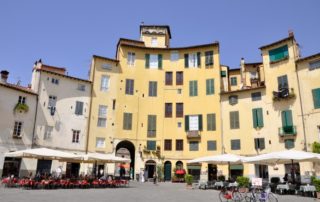
  • Piazza Anfiteatro: Once a Roman amphitheater, it’s now an enchanting oval piazza with the ancient arches embedded into the picturesque buildings. A great spot for an espresso and some shopping. I found great linen treasures at a few shops. We also bought a playful Lucca painting by Bianchi Giampiero that always makes me smile when I pass it on our wall.
  • Piazza San Michele: The heart of Lucca is a great place to hang out with the backdrop of the ornate cathedral. To get here from Piazza Anfiteatro, enjoy the shopping along Via Fillungo and Via Roma like Paris, for housewares, and Enotecca Vanni, for a great wine selection packed into small cellars. The third Saturday and Sunday of each month Lucca also hosts 230 antique dealers throughout town.
  • Giacumo Puccini Home: Puccini (1858-1924) was born here and coming 13 September his birth house and museum reopen to visitors. You’ll find him celebrated throughout the year in concerts like those at the 19th century Teatro del Giglio.

Another venture I’d like to do next visit is Strada del Vino e dell’Olio in the Lucca Province outside of town for their D.O.C. wine and D.O.P. olive oil producers! The local Montecarlo wines I had were quite nice.

Next leg of our Tuscan Culture and Coast Weekend…Viareggio!

More great Lucca photos are in the gallery!

Tagged As:
, , , , ,

Puglia: Masseria Torre Coccaro, Our Home Away from Home

As we pulled off the paved back road just off the sea onto the quiet dirt road per our TomTom instructions, we came upon two white stone pillars and a gate which opened to the gorgeous grounds of Masseria Torre Coccaro. We circled around the drive and into view came the pure white washed main house of the Masseria dripping with pinkish flowers and green vines. I knew we had picked the right place to call home for our week in Puglia!

Masseria are old fortified farmhouses of Puglia… many have been turned into bed and breakfasts or to five star hotels like this one. Torre Coccaro has so many fabulous offerings and amazing service that you could never leave to explore Puglia.

* Grounds: Gorgeous gardens and olive tree groves surround the property. We wandered around our first morning after breakfast and couldn’t believe all the secluded spots we discovered. The vegetable garden was alive with grape vines, fennel, almond trees, radishes, chicory, zucchini, artichokes and figs. A secret path leads you to the billiards room and event space. There’s ample outside seating areas constructed out of the white washed remains of the masseria. There’s even a beautiful little chapel off the main courtyard.

* Accommodations: Our superior room on the backside of main courtyard was Italian rustic country style. Our front porch terrace draped with pink beach roses was complete with lounge chairs and table where we spent many evenings with a rosé watching the sunset behind the broccoli field and olive trees. As you entered through our red wooden double doors, you came into another sitting area then the bedroom with crisp white bed linens and white linen canopy hanging overhead. The only noises we heard in the morning were birds chirping. There are 39 rooms and suites to chose from.

* Restaurants: Egnathia is the main restaurant where the amazing breakfast spread is served…fresh fruit table, meats and cheeses, long pastry table or order from the menu. The dinners are divine! We had three here for the food AND atmosphere… low lighting, candles, sitting outside looking out onto the white washed Masseria. The Cabana by the pool is the perfect setting for lunch as is the Coccaro Beach Club where we had lunch one day. Opening night of the beach club restaurant was during our stay… a big crowd was expected for an into the morning party.

* Spa: Ahhh! You’ll find this sanctuary through a small secret red door. You descend the steps into Aveda spa that’s been build into the rock for a relaxing treatment. I opted for Massagio Olio d’Oliva as it’s the ‘liquid gold’ of Puglia. And the olive oil used for the massage was from the trees on the property! Whether in your treatment room or enjoying the whirlpool tub after, you’ll feel like you’re in a secluded cave. I used the Turkish Hammam then fell asleep on the lounge bed by the whirlpool. If you’re so inclined, there’s also a nice gym surrounded by windows so you feel like you’re exercising outside.

* Beach & Pool: The pool is a great spot to laze away the day. It’s constructed to look almost like you’re on the beach with a ‘sand’ entrance and surrounded by a small pier. Or head to the beach (a 10 minute drive or shuttle ride away) and enjoy their Coccaro Beach Club. We spent half a day here but wish we had more time. Swim in the blue waters of the Salento sea and soak up the sun on one of their beach chairs.

The Masseria staff is extremely accommodating. They can arrange many activities to enjoy like tours of the local towns, cooking classes or horseback riding.

Yet with all that’s available, Masseria Torre Coccaro is quaint, quiet and other than the lovely people around you at the restaurant or pool, we felt like we had this gem all to ourselves!

Tagged As:
, , ,

Puglia Cuisine: Home of Orecchiette Pasta and Burrata Cheese

A cuisine born of peasants living seasonally off the land, Pugliese cuisine is rooted in olive oil, wheat and vegetables. Puglia produces more than 50% of Italy’s olive oil and it has been a thriving industry here for centuries, thus the huge olive trees and there are 50 million of them! Durum wheat grown here is used to make 80% of Italy’s pasta as well as the region’s famous bread. And with two coasts, local seafood is a huge staple of the cuisine. So needless to say, La cucina pave, or poor man’s food as it’s called, is one of the highlights of your time here.

While the land is arid, it’s very alive. There are olives, fruits, vegetables and grapes growing everywhere, like no other region I’ve ever seen. Just across the stone wall from our suite at the masseria was a huge field sprouting with broccoli surrounded by giant olive trees. The air had a nice scent of fresh broccoli (not cooked ;) ). The masseria’s huge garden was an abundance of artichokes, chicory, fennel, figs, almonds, radishes and early buds of grapes.

Pranzo, or lunch, is the heartiest meal of the day and what most locals keep sacred (thus town shops closing from 1-4pm daily). Cena, dinner, is more simple. On our visit we typically reversed it although most days we had three full meals… couldn’t turn down the masseria’s amazing fresh local breakfast.

In Pugliese cuisine, you’ll find…

* Olives: Whether it’s the olive or the oil, most meals start with this. Most abundant are the green Cerignola olives. The olive oil is all extra virgin and because of the above point it’s often referred to as ‘liquid gold.’ Best regions for olive oil, all with DOP grading (denomination d’ origin protetta), are the Salento around Lecce, Fasano and around Brindisi.

* Fruits and Vegetables: Tomatoes are another staple here but that’s just the beginning. Eggplant and zucchini… deliciously fried up for antipasta or grilled in pastas. We started every meal with sopratavola, raw vegetables usually including fennel, chicory, carrots and cocomeri (a tiny mild cucumber). In earlier times sporatavola was eaten after a meal as the peasants couldn’t afford fruit. Cicorie, wild chicory, was a new one for me and is used in abundance especially cooked up in the local specialty purea di fave, fava bean puree (fava beans cooked up with olive oil and chicory until its a deep green). Legumes, like fava bean and ceci (chickpea), you’ll also find as a staple. Fruits like cherries, grapes and figs were in season during our visit. Later in the summer add pomegranates, watermelon, melons, peaches, strawberries and raspberries.

* Pasta: THE famous pasta from this region is orecchiette meaning ‘little ears’ often served simply delicious with oven-roasted tomatoes, olive oil and garlic. We also had a yummy trofiette pasta with fava bean puree, crispy artichoke leaves and baby shrimps.

* Bread: Made from the local durum wheat, the typical loaf is a hearty bread with a crunchy crust and chewy inside. Perfect for soaking up your pasta’s sauce, or fare scarpett (‘to make a little shoe’) as they say in Italian. My FAVORITE bread is the taralli, little baked dough knots like an Italian pretzel made of simply wheat flour, olive oil and white wine. We had them with sopratavola before almost every meal.

* Cheese: The specialty here is the fresh and creamy kind…burrata. A type of mozzarella (which is originally from here too) it’s a little round of stretched curd cheese filled with cream. When you cut it open, the creamy cheese just oozes out. Yum!

* Seafood: Mussels, octopus and prawns everywhere. Mussels make the very popular and traditional Pugliese dish riso cozze e patate (rice, mussels and potatoes) baked in the oven (also known as taieddha in Lecce where zucchini is added). One night at the masseria we had a delicious local Adriatic Codfish with spicy cherry tomatoes and eggplant. One lunch was a simple salad of shrimp, avocado and cherry tomatoes.

* Meats: While not a staple, you will find it on menus. We had a fabulous pork tenderloin stuffed with sundried tomatoes and glazed with a Primitivo wine sauce at the masseria. One night in Ostuni at Casa San Giacomo, we had orechiette al argue mist e braciola, pasta with a mouthwatering sauce made of pounded thin beef rolled with cheese and herbs. And if you’re interested, or want to avoid it like I did, you will find horse meat on the menus here, cavallo in Italian.

* Pastries: Flaky pastries in savory or sweet. THE best we’ve ever had was the Rustica at La Rusticana in Lecce. This local specialty is a flaky pastry shaped like a cinnamon roll filled with mozzarella cheese, tomatoes and a little béchamel sauce. Yum!! For sweet, try zeppelin and sporcamusi, both phyllo type pastries filled with custard, or cassatina, a yummy spongecake.

Squisito!! I made notes on all our meals and pictures so I could write for hours. But now on to the Pugliese wine to accompany this amazing food!

Tagged As:
, , , ,